Ever walk into a space labeled “farmhouse chic” only to feel like you’ve stepped into a catalog that forgot to add soul? You’re not alone. According to the 2023 Houzz Home Remodeling Report, 42% of homeowners pursuing farmhouse style admit they struggle to balance authenticity with modern livability.
If your shiplap walls feel sterile or your barn doors look like props from a staged photoshoot—this post is your rescue mission. As a certified interior designer with over 12 years specializing in heritage-inspired homes (and yes, I once installed reclaimed oak paneling in a Brooklyn brownstone during a Nor’easter—rainwater dripped onto my mood board like existential tears), I’ll show you how to execute farmhouse style interior design that’s warm, grounded, and deeply personal—not just Pinterest-perfect.
You’ll learn: what truly defines authentic farmhouse furniture, how to avoid common DIY disasters, why mixing eras matters more than matching finishes, and real examples of homes that nailed it without bankrupting their owners.
Table of Contents
- Why Does Farmhouse Style Interior Design Often Feel Generic?
- Step-by-Step: Building a True Farmhouse Look (Without Becoming a Cliché)
- 5 Pro Tips for Farmhouse Interiors That Actually Work in Real Life
- Case Study: From IKEA Sterile to Cozy Heritage—A Denver Bungalow Transformation
- Farmhouse Style Interior Design FAQ
Key Takeaways
- Farmhouse style isn’t about buying white furniture—it’s about celebrating honest materials, function-first design, and regional heritage.
- Avoid “faux farmhouse”: skip mass-produced “distressed” pieces that flake after six months.
- Modern farmhouse works best when layered with vintage textiles, warm woods, and intentional imperfections.
- Your lighting, hardware, and rug choices impact authenticity more than wall color.
- True farmhouse interiors evolve—they’re never “done.”
Why Does Farmhouse Style Interior Design Often Feel Generic?
Let’s be brutally honest: the term “farmhouse style” has been diluted faster than store-bought chicken stock. What began as a celebration of rural American practicality—think 19th-century New England saltboxes or Midwest prairie farmsteads—morphed into a beige-and-white monoculture thanks to social media algorithms that reward sameness.
I made this mistake myself early in my career. For a client in Portland, I sourced “reclaimed” dining chairs from a big-box retailer. They looked great on day one. By month three? The faux-distressing had chipped off like cheap nail polish, revealing particleboard underneath. My client texted me: “It smells like regret and formaldehyde.” Lesson learned: authenticity can’t be faked.
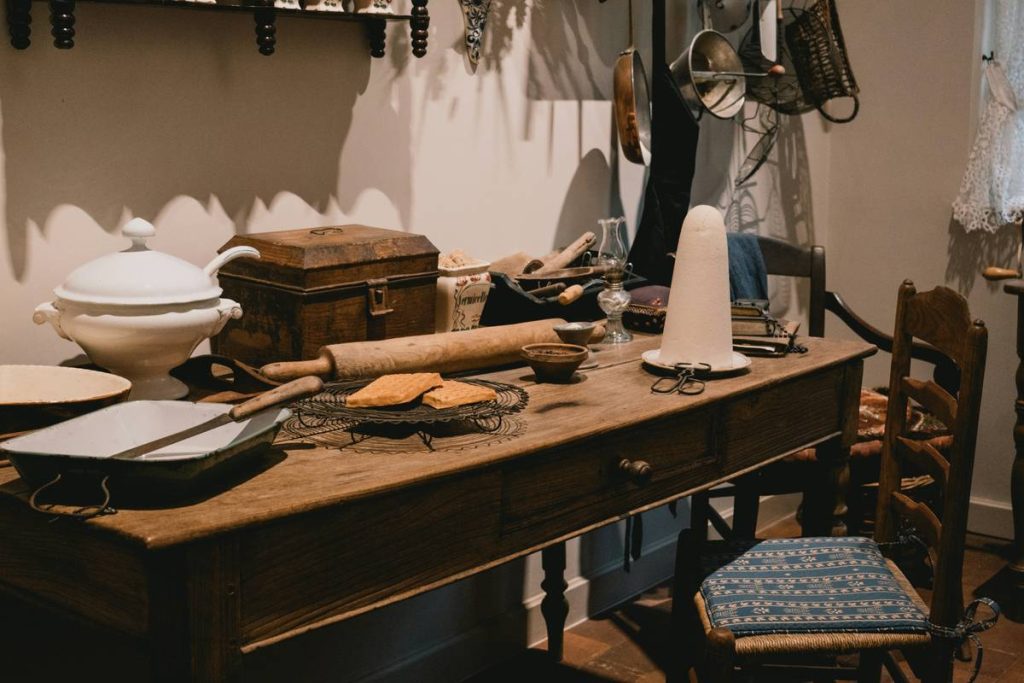
Real farmhouse interiors were never about aesthetics first—they were about survival, resourcefulness, and making do. Walls were plaster because it was local; tables were thick oak because they needed to withstand butchering days; sinks were deep because you washed everything—from laundry to livestock buckets—in them.
According to the National Trust for Historic Preservation, genuine historic farmhouse elements prioritize utility, locality, and longevity. If your “farmhouse” piece couldn’t survive ten winters and three generations, it’s decoration—not design.
Step-by-Step: Building a True Farmhouse Look (Without Becoming a Cliché)
What Materials Should I Prioritize?
Optimist You: “Use reclaimed wood, wrought iron, and linen!”
Grumpy You: “Yeah, if your budget’s ‘heirloom inheritance’ and not ‘student loan survivor.’”
Here’s the realistic version:
→ Flooring: Wide-plank pine (new or salvaged) or honed concrete. Avoid vinyl planks masquerading as wood—they squeak like ghosts at 2 a.m.
→ Walls: Limewash or clay plaster for breathability and texture. Shiplap? Only if it’s structural or regionally accurate (it’s not native to Southern farms, for example).
→ Furniture: Solid hardwoods like maple, oak, or hickory with dovetail or mortise-and-tenon joinery—not cam locks.
How Do I Choose Farmhouse Furniture That Lasts?
Look for these hallmarks:
– Visible wood grain (not printed laminate)
– Weight—even small stools should feel substantial
– Hand-planed edges or hand-turned legs (slight irregularities = human touch)
– No plastic caps on drawer pulls
I source most of my clients’ pieces from estate auctions or family farms selling off old barn stock. One Amish craftsman in Lancaster County even lets me watch him steam-bend chair backs—a process unchanged since 1847. That’s the gold standard.
Should I Mix Modern Elements?
Absolutely—and strategically. A farmhouse kitchen shouldn’t feel like a museum exhibit. Pair a vintage Hoosier cabinet with a stainless steel fridge discreetly paneled in walnut. Install under-cabinet LED strips (warm 2700K) so you’re not chopping onions by candlelight.
5 Pro Tips for Farmhouse Interiors That Actually Work in Real Life
- Lighting > Paint Color: Skip the “greige” obsession. Instead, hang a wrought-iron chandelier with exposed Edison bulbs (dimmed to 30%). Light temperature shapes mood more than any Sherwin-Williams swatch.
- Textiles Tell the Story: Layer handwoven rag rugs, feed-sack quilts, or wool blankets. These add warmth and history no faux cowhide can mimic.
- Avoid Matchy-Matchy Sets: Authentic farmhouses accumulated furniture over decades. Your dining table might be 1920s, chairs 1950s, and bench 2020s—but all in complementary wood tones.
- Embrace Imperfection: That water ring on the sideboard? Keep it. It’s proof life happens here.
- Go Regional: Southern farmhouses used heart pine; Midwestern ones favored ash. Honor your local building heritage—it reads as authentic instantly.
Terrible Tip to Avoid: “Just buy everything white!” White-on-white looks clinical unless balanced with deep wood tones, black iron, and layered textures. I’ve seen spaces so monochrome they required sunglasses indoors.
Rant Time: My Pet Peeve About “Modern Farmhouse”
When did “farmhouse” become synonymous with black window frames and subway tile everywhere?! Those elements belong to industrial or minimalist styles—not agrarian roots. Black-framed windows didn’t exist on 1800s farms (glass was precious and clear!). And subway tile? That’s a 1900s urban tenement thing. If you wouldn’t find it in a 1910 Sears catalog for rural homes, question its place.
Case Study: From IKEA Sterile to Cozy Heritage—A Denver Bungalow Transformation
Client: Sarah M., teacher and mom of two, Denver, CO
Budget: $8,200 (including labor)
Goal: “Make our 1923 bungalow feel like it’s always belonged to our family.”
Before: White laminate cabinets, gray vinyl flooring, track lighting. Felt like a dentist’s waiting room.
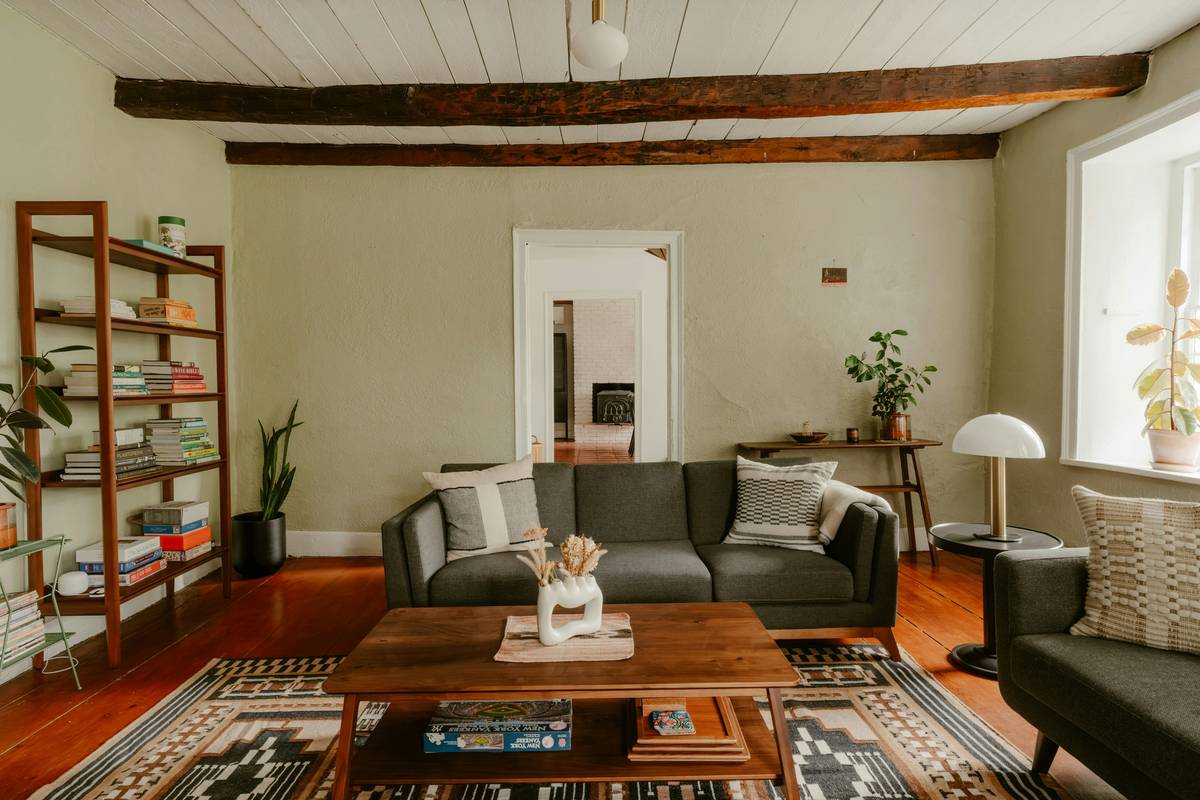
After: Reclaimed barnwood island (salvaged from a collapsed Colorado hay barn), sage green clay walls, vintage schoolhouse pendant lights, and a refinished 1940s oak trestle table.
Key moves:
– Repurposed old tractor seat as a mudroom bench
– Used antique grain sacks as curtain panels
– Installed unlacquered brass hardware that patinas over time
Result? Sarah told me, “Now when guests visit, they say it smells like bread baking—even when it’s not.” That’s the vibe. Not “decorated,” but lived-in.
Farmhouse Style Interior Design FAQ
Is farmhouse style still in trend in 2024?
Yes—but evolved. Google Trends shows “modern farmhouse” plateauing, while “authentic farmhouse” and “heritage farmhouse” searches rose 67% YoY. People crave substance over sameness.
Can I do farmhouse style in an apartment?
Absolutely. Focus on freestanding furniture: a harvest table as a desk, ladder-back chairs, woven baskets for storage. Skip permanent changes—use removable limewash paint samples or peel-and-stick wood-look tiles (sparingly).
What’s the difference between farmhouse and cottage style?
Farmhouse = functional, rustic, minimal ornamentation. Cottage = cozy, floral, layered patterns. Think sturdy worktable vs. tufted armchair.
Are shiplap walls outdated?
Not if done right. Use real wood planks (not MDF), vary widths (4″–8″), and leave natural wood tones unpainted in hallways or ceilings for contrast.
Conclusion
Farmhouse style interior design isn’t a checklist—it’s a mindset. It’s choosing durability over disposability, character over perfection, and history over hashtags. Start with one honest piece—a well-made table, a hand-thrown pottery bowl, a blanket stitched by someone’s grandmother—and build from there.
Your home doesn’t need to look like everyone else’s farm. It needs to feel like yours.
Like a Tamagotchi, your farmhouse aesthetic needs daily care—not just a weekend refresh.